
Driving Simulator Design
Our client runs a driving-simulator rig company and needed its full range modelled in CAD and dressed for marketing. We built complete assemblies from a mix of standard extrusion profiles and custom parts, generated the BOM and assembly manuals, and produced a render system that the client's website configurator uses to build hundreds of variants without re-rendering each one.
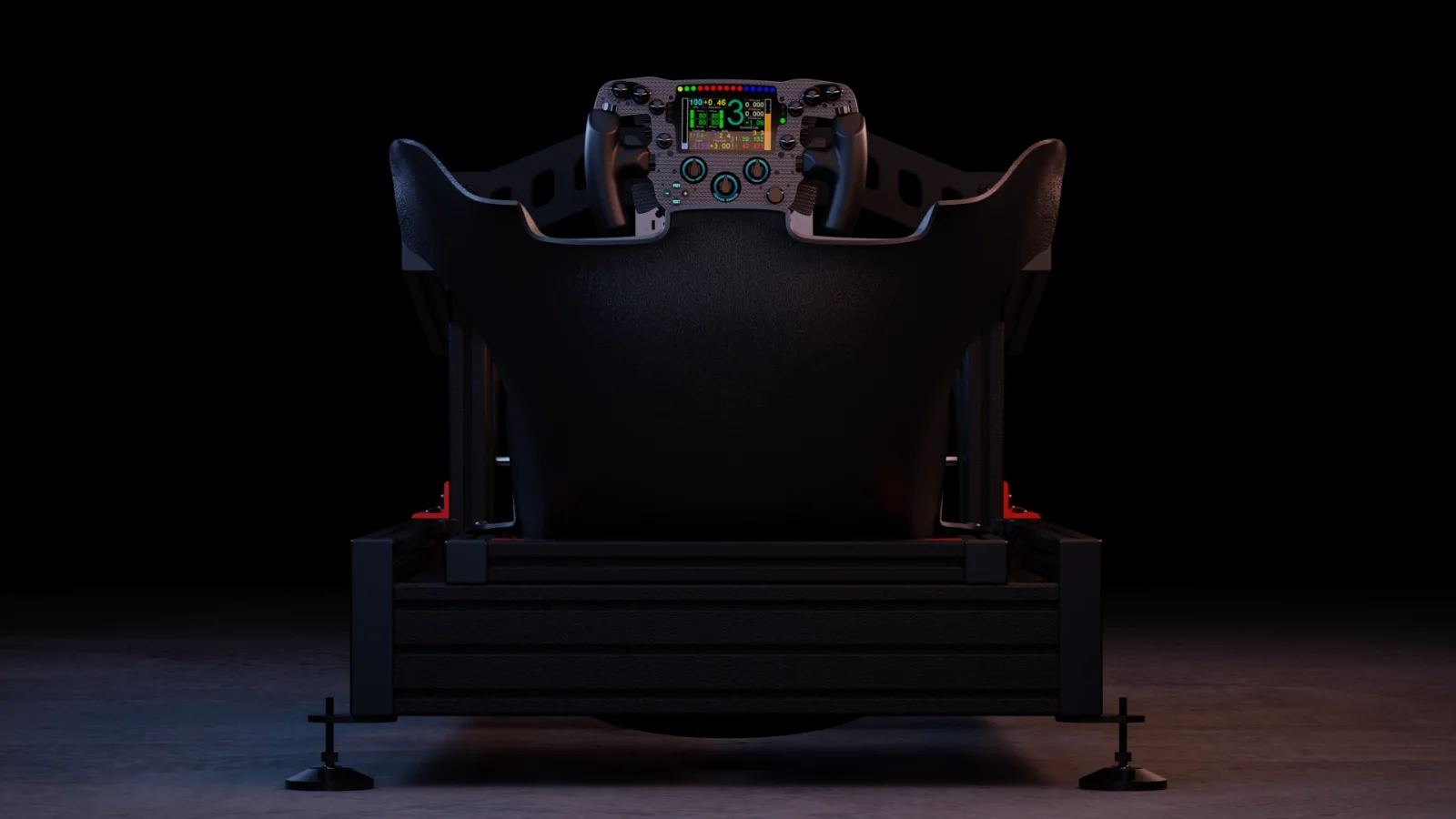
The configurator render system
The rigs ship in many configurations, so instead of rendering every combination we built the renders in layers. The base frame renders on its own in each colour, then every steering-wheel option, then the pedals, then the seat. Those layers drop into the website configurator like puzzle pieces, which builds hundreds of combinations from one set of renders and saves us re-rendering whenever something changes.
CAD assembly and engineering
With every component sourced or modelled, we built the CAD assembly and located each part with the same joints and constraints as the real hardware, then ran interference and fit checks before manufacture. The custom parts are covered in CAD Parts.
Manufacturing and assembly docs
We produced a BOM for each rig and a step-by-step assembly PDF, drawn from the CAD assemblies in the technical-drawing environment, where clean line outlines make each component easy to follow.
Explore the system
Formula Sim · Small Sim · CAD Parts · Formula Wheel