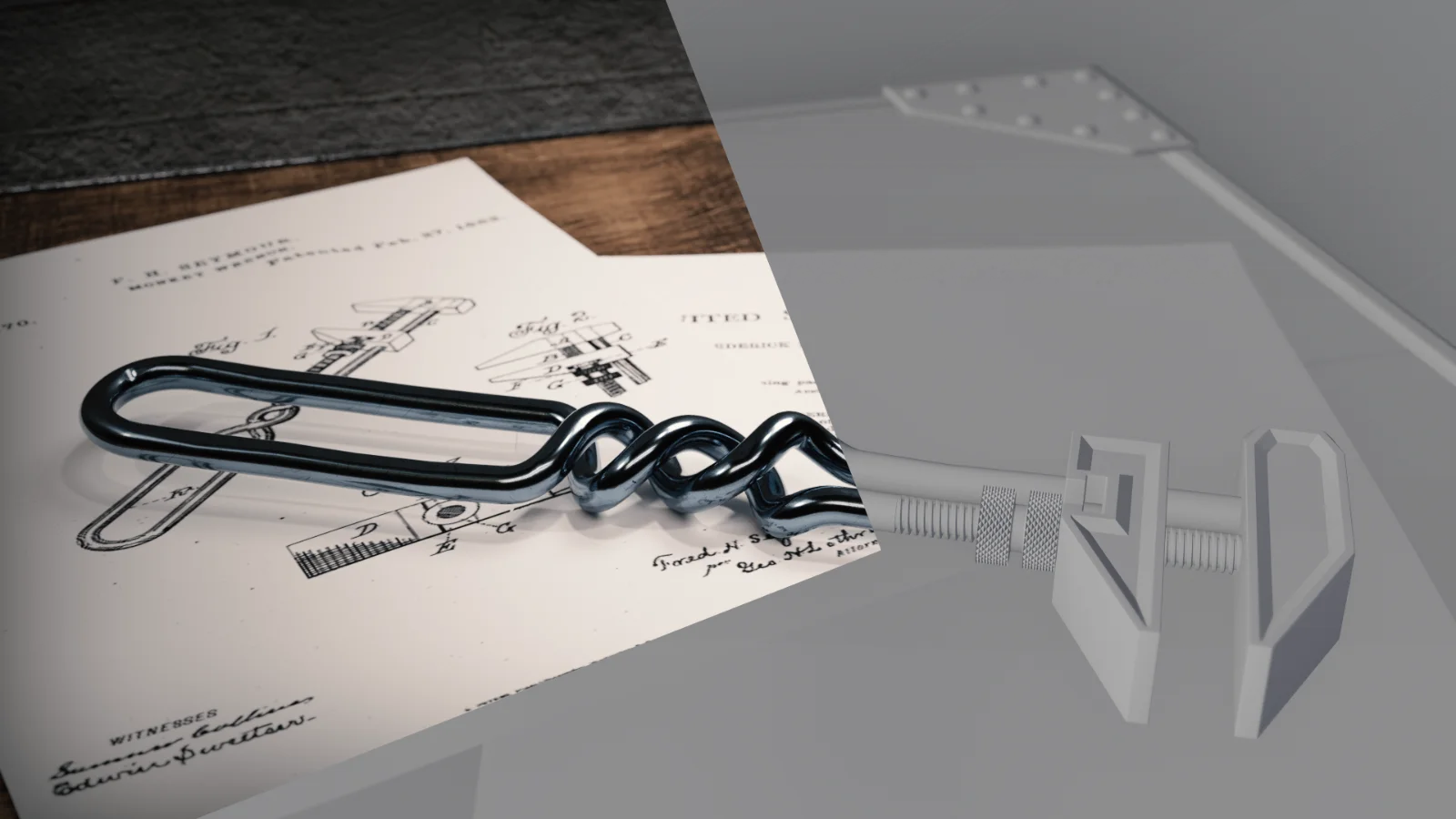
Patent Wrench Case Study
We have a soft spot for old patents and mechanical ingenuity, and we recreate them to keep our modelling sharp for client work. This study reconstructs Frederick H. Seymour's 'Monkey Wrench', U.S. Patent No. 273,170, from the single-page patent drawing.
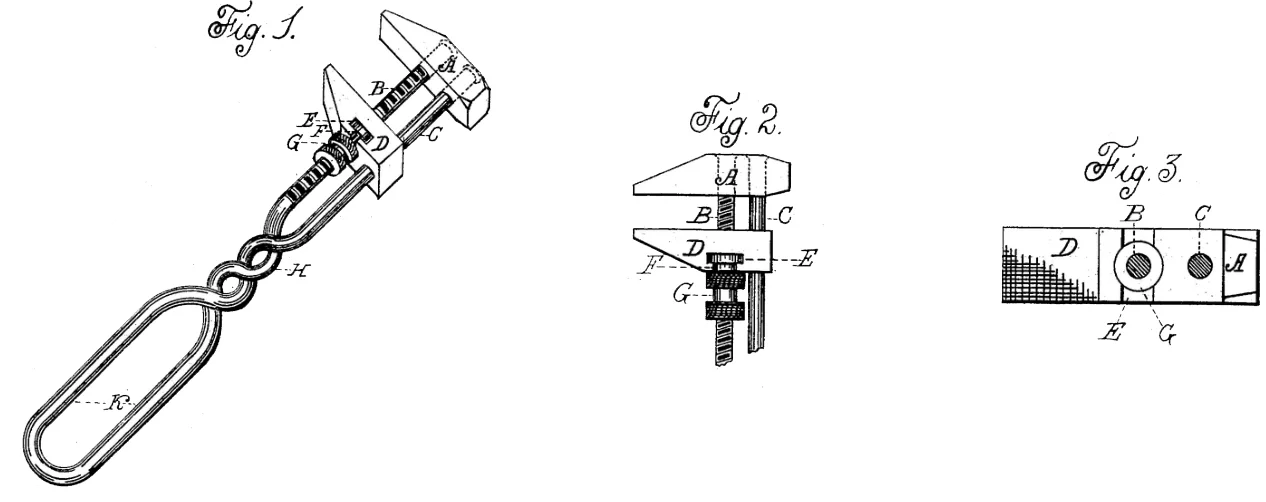
From patent drawing to CAD
The mechanism is simple, but the recreation is a satisfying challenge, a good afternoon exercise in reading an old drawing and rebuilding it accurately. The tool is composed of four basic parts. A twisted handle gives it greater rigidity than a plain bent U-loop would. The thread is machined directly into the handle stock, and an adjustment nut travels along it; that nut carries a notch that catches the lower moving jaw and a knurled band that improves grip while adjusting.
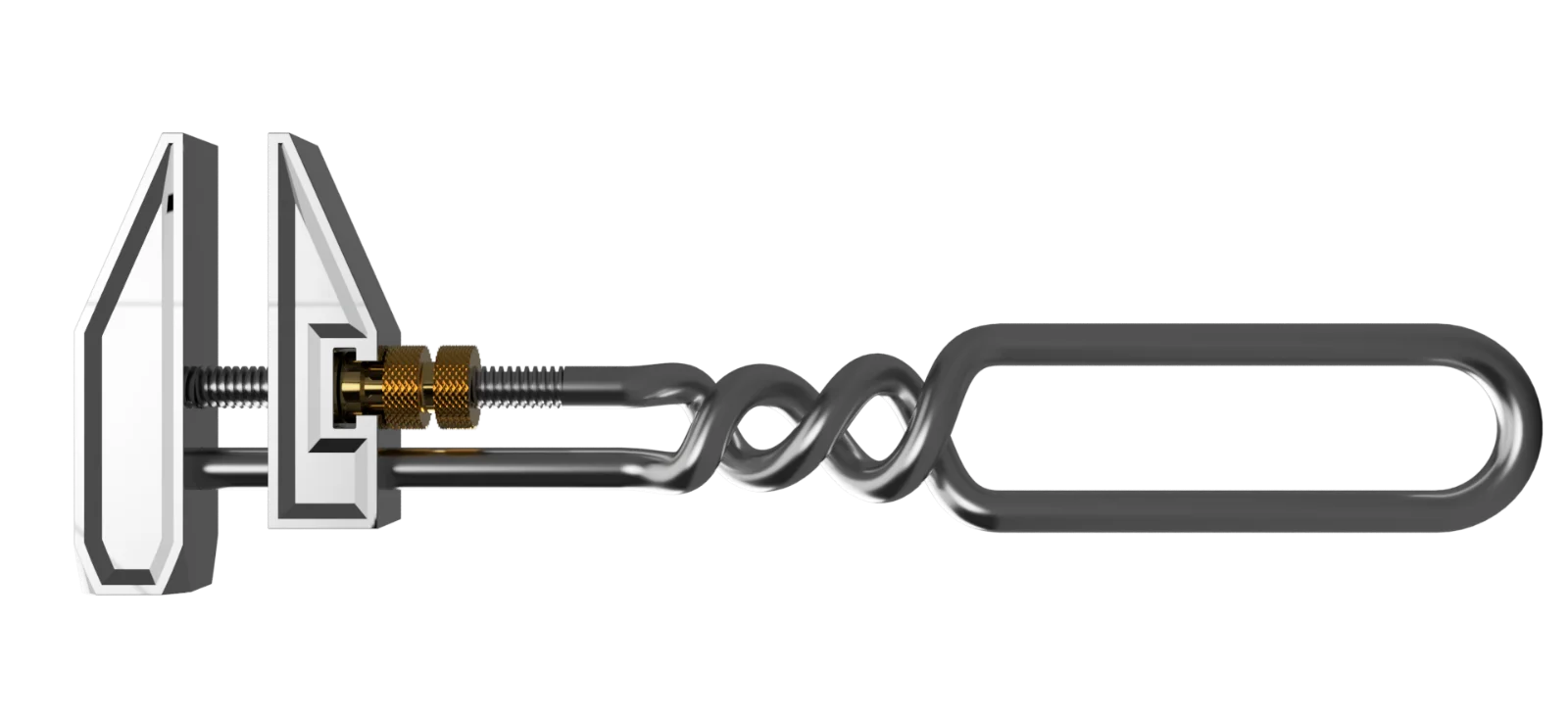
Assembly and render
The upper fixed jaw is held in place by widening the bent handle stock after insertion. To practise scene setup and materials, we took the finished model into Blender and rendered the wrench resting on a table beside the patent sheets.